What Should You Serve With a Yellow Curry?
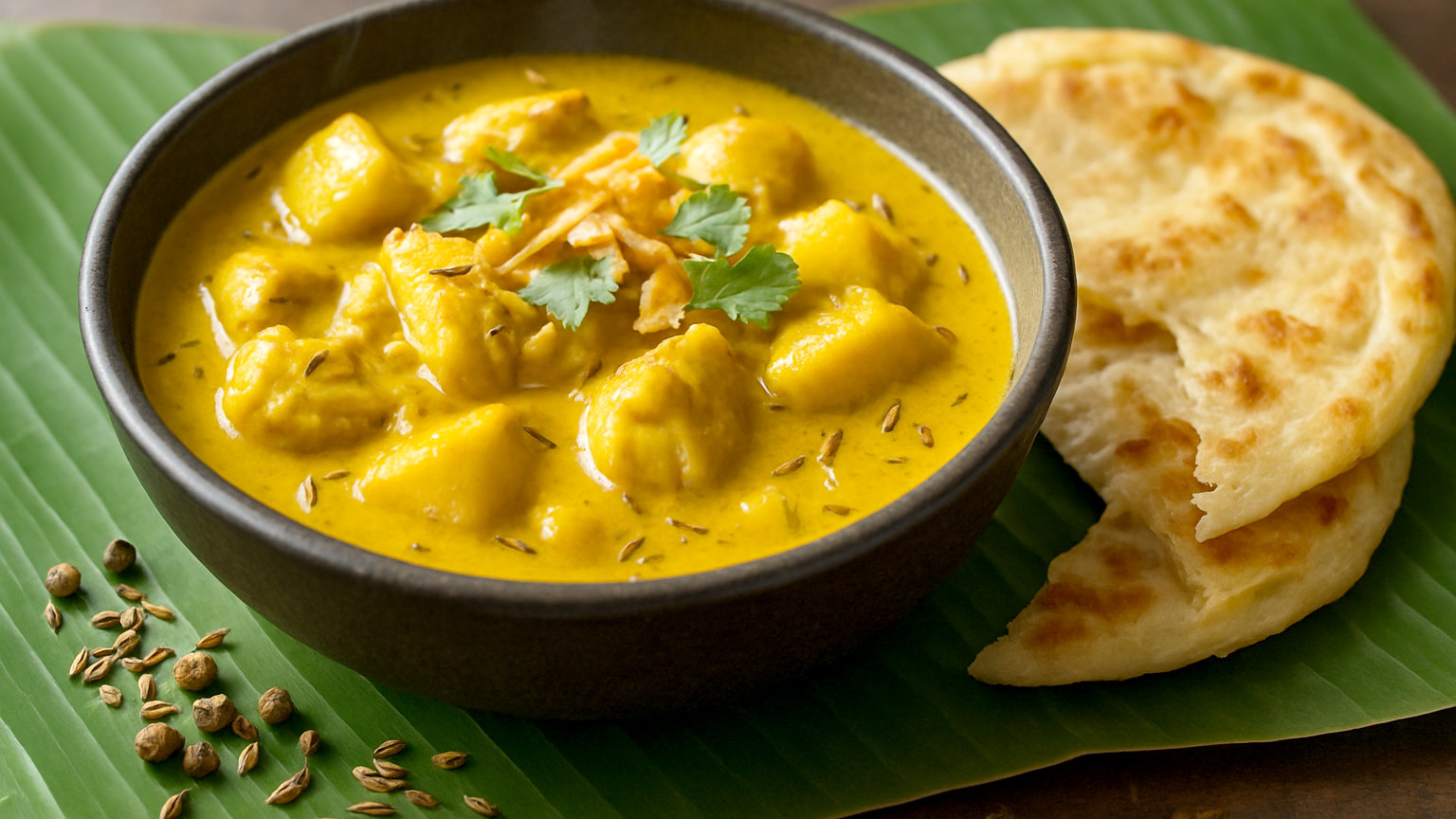
Less rice than usual, since the potato is already there, and something sharp to lift a gentle dish. Roti works here in a way it does not with a green curry.
Thai curry is quick to cook and easy to get wrong, because almost every recipe skips the step that makes it taste like the restaurant version: frying the paste in split coconut cream until the oil separates and the kitchen smells of it. These recipes put that first. They also give an honest account of shop-bought pastes - which brands are worth buying, how much more you need than the jar suggests, and what to add to lift one - alongside the from-scratch versions for when you have a pestle and mortar and half an hour.
Less rice than usual, since the potato is already there, and something sharp to lift a gentle dish. Roti works here in a way it does not with a green curry.
No coconut milk at all, which changes everything. The paste fries in plain oil, the liquid is stock, and there is nothing to soften the chilli.
Because it comes from inland forested regions where coconut palms do not grow. The absence is geography rather than a stylistic choice.
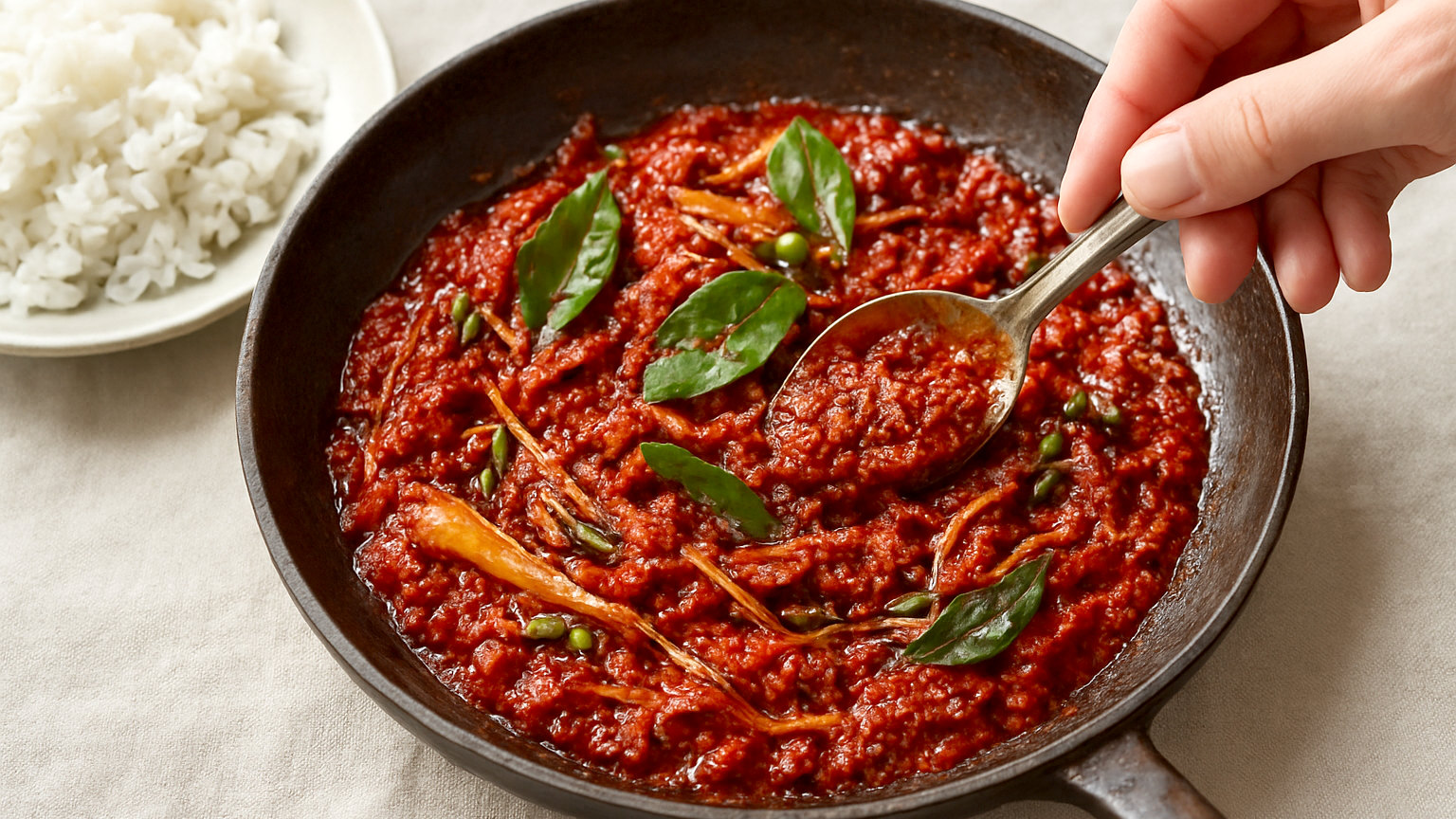
Closer to a red paste than anything else, with krachai and fresh peppercorns added and the ground spices left out. It should smell green and fierce.
A wild ginger relative sold as fingerroot, with a medicinal earthiness that appears in no other Thai curry. It is the flavour people cannot place.
Pork suits the dish well, since a little fat helps in a curry with almost none. Sliced belly or shoulder both work, and neither needs long.
Because capsaicin is fat-soluble and there is no fat. The same chilli quantity that a coconut curry absorbs lands with full force in a water-based broth.
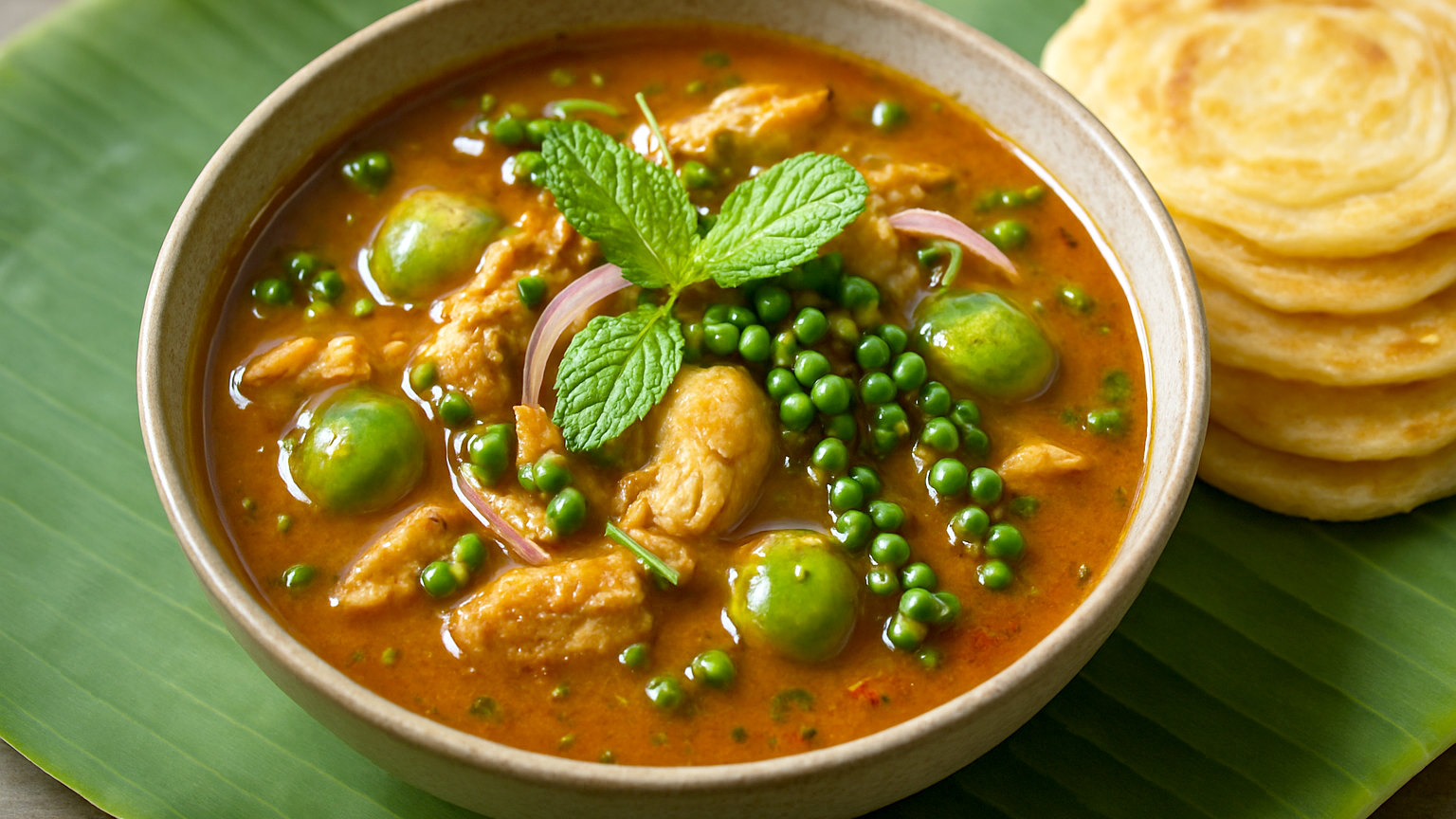
Unripe black peppercorns, still soft and on the stalk. They give a bright piney heat quite unlike chilli and are eaten whole rather than ground.
The original version, since freshwater fish was what inland cooks had. Build the broth completely and poach the fish in it for six minutes without stirring.
From forested inland Thailand, where coconut palms do not grow and cooks used whatever was foraged. The name means forest curry and describes the dish exactly.
More than any other Thai curry, and the list was never fixed. Firm, fresh and varied is the principle, since they supply the bulk a coconut sauce would.
The vegetables already carry it, so this adapts more easily than most. The difficulty is the stock, since a thin broth cannot hide a weak one.