Should a Thai Green Curry Be Sweet?
Faintly, and from palm sugar balancing the fish sauce rather than as a flavour in its own right. British versions are consistently sweeter than Thai ones.
Thai curry is quick to cook and easy to get wrong, because almost every recipe skips the step that makes it taste like the restaurant version: frying the paste in split coconut cream until the oil separates and the kitchen smells of it. These recipes put that first. They also give an honest account of shop-bought pastes - which brands are worth buying, how much more you need than the jar suggests, and what to add to lift one - alongside the from-scratch versions for when you have a pestle and mortar and half an hour.
Faintly, and from palm sugar balancing the fish sauce rather than as a flavour in its own right. British versions are consistently sweeter than Thai ones.
Firm white fish holds together where flaky fish disintegrates. Add it in large pieces, do not stir, and give it six minutes at a bare simmer.
Jasmine rice and not much else. Thai curry is meant to be one dish among several small ones, and the rice matters more than any side.
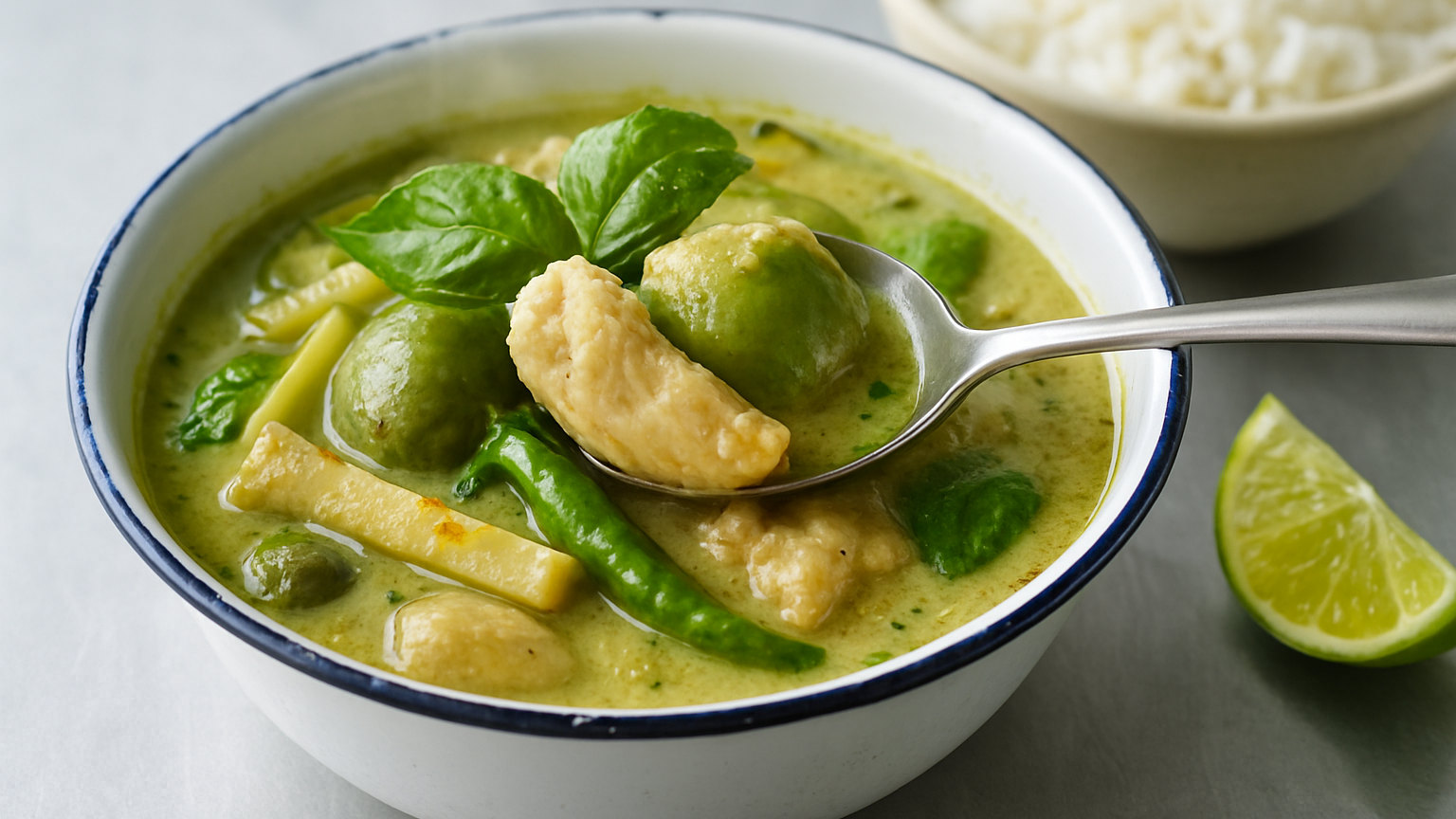
The most forgiving of the Thai curries and the best one to learn the method on. Split the cream, fry the paste hard, and balance at the end.
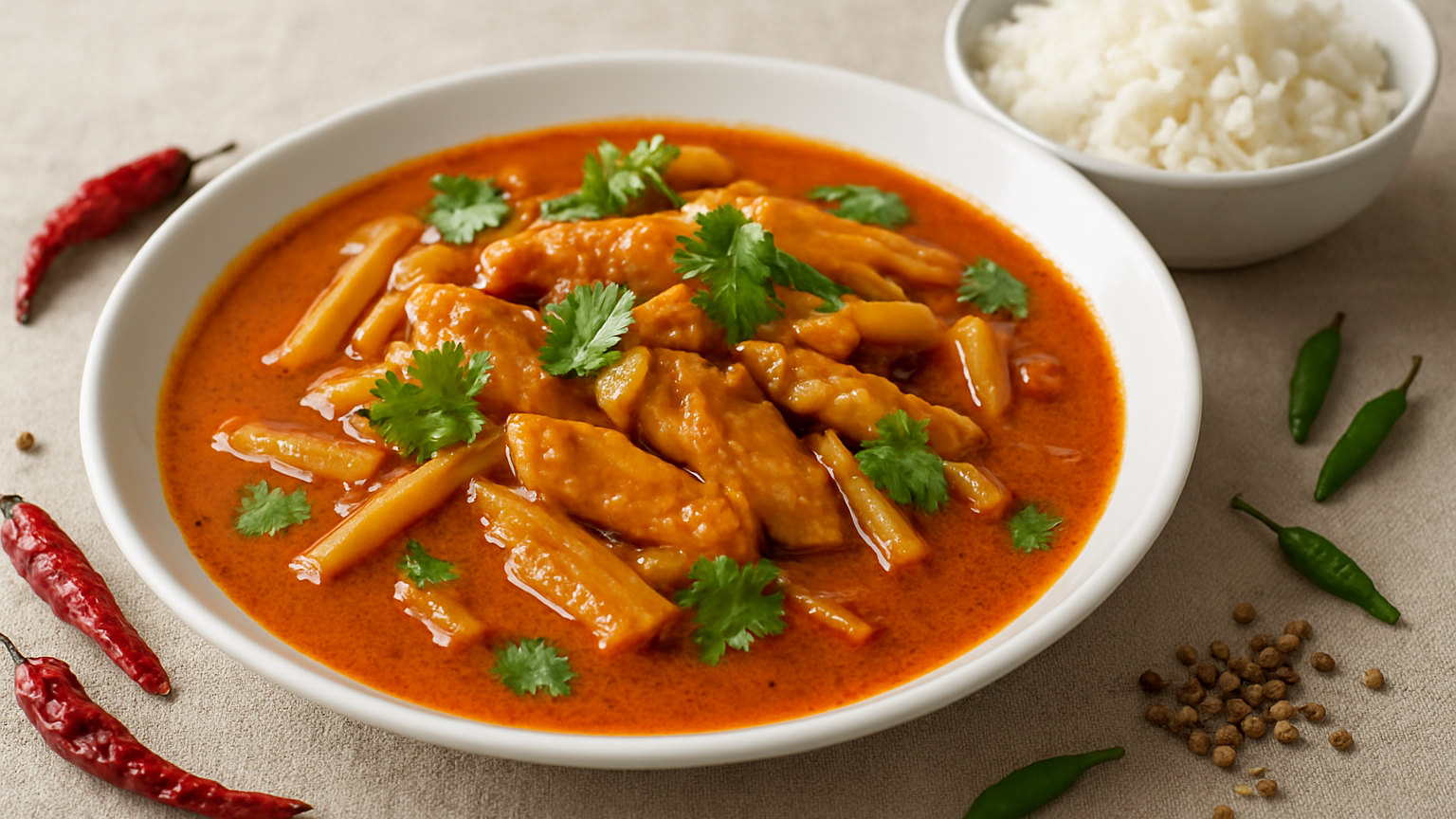
Because dried red chillies are riper, sweeter and used in smaller effective quantity than the fresh green bird eye chillies that drive a green paste.
Soak the dried chillies, pound the woody things first, and add the wet ingredients last. Twenty-five minutes gives you enough for two curries.
Large mild spur chillies for colour and body, small hot ones for heat. Using only the small ones gives a fierce paste with no depth behind it.
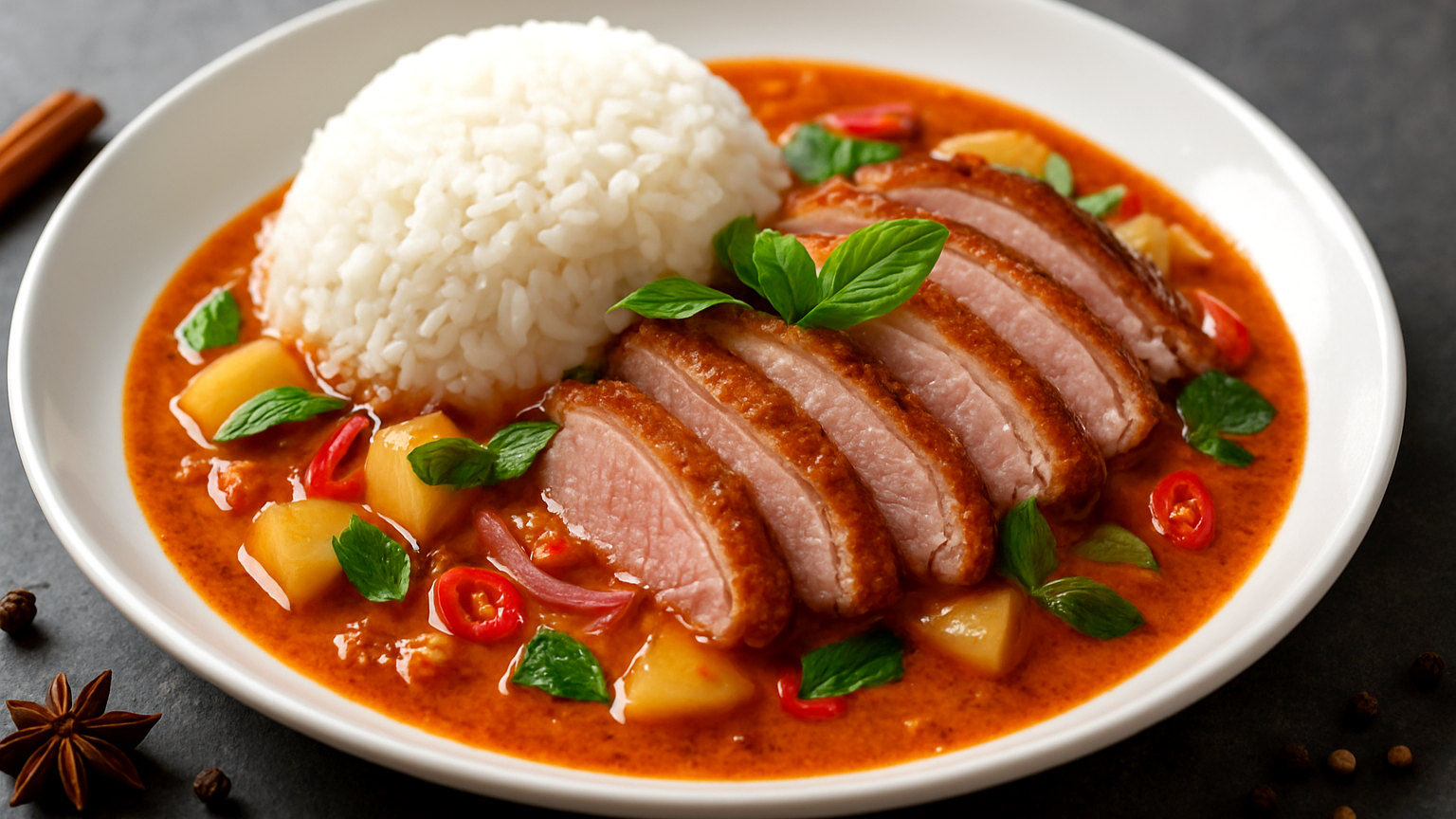
The classic pairing, with pineapple or lychee cutting the richness. Use cooked duck and add it at the end rather than simmering it raw.
Yes, on almost every measure. It is the most forgiving of imprecise seasoning, the most flexible about ingredients, and the paste is easiest to find.
Either sear steak and add it at the end, or braise shin for ninety minutes. There is nothing workable in between, and the choice shapes the whole recipe.
All three start from dried red chillies. Panang adds peanut and more lime leaf, massaman adds warm whole spices and tamarind, and both are milder than red.
Check the paste for shrimp, replace the fish sauce with soy and miso, and use butternut squash, which suits red paste better than any other vegetable.