How to Make Roti to Serve With Curry
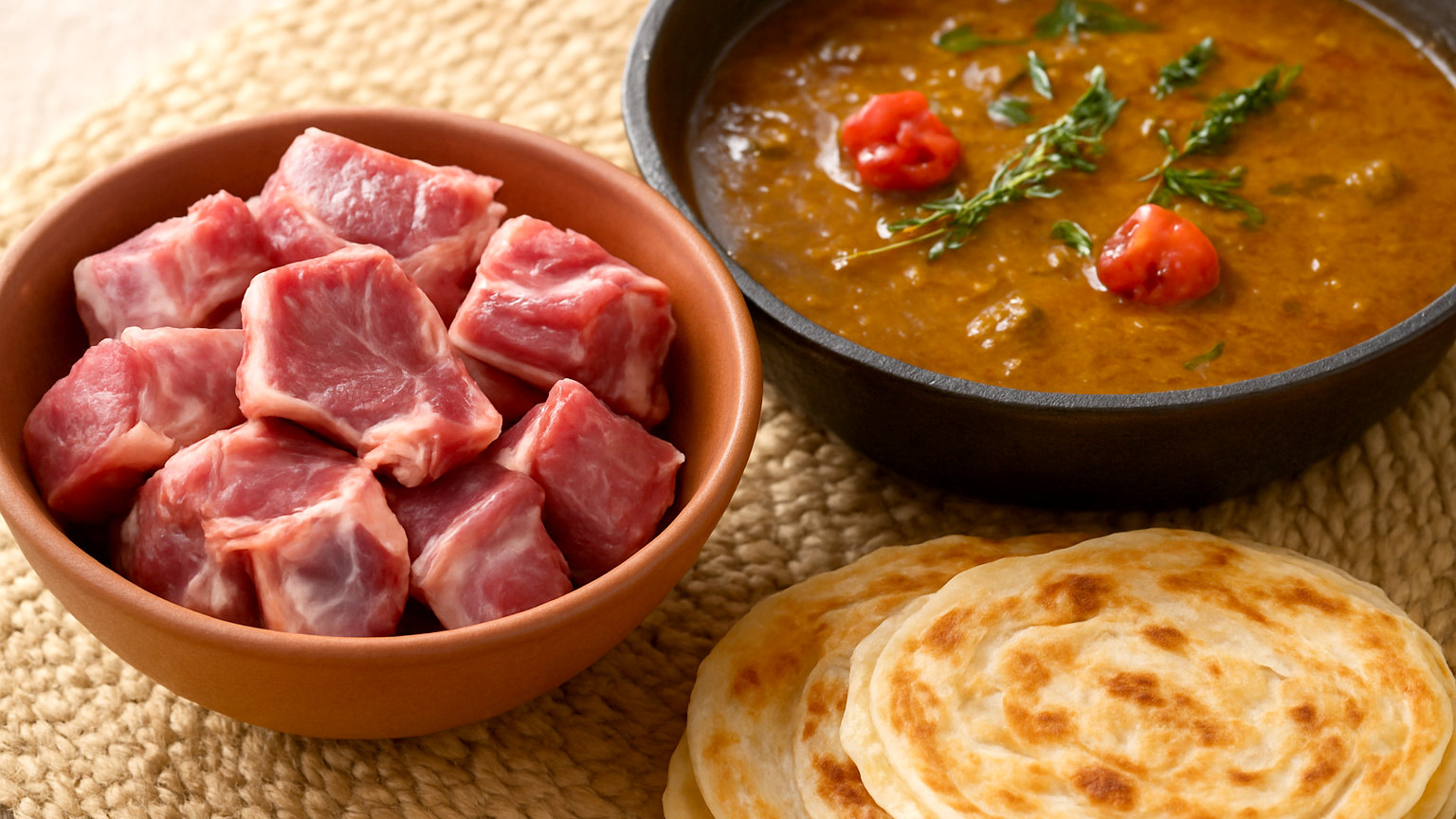
Layered with oil, cooked on a tawa and then clapped between the hands to break the layers apart. The result is called buss up shut for good reason.
By Curry Recipes Team
27 Oct 2025

Curry travelled, and everywhere it landed it changed. These recipes follow it: goat curry with Caribbean curry powder that is burnt in the pot before anything else goes in, Sri Lankan curries built on roasted dark spice and thick coconut milk, Malaysian and Indonesian curries that start with a pounded rempah, and the British curry-house canon that grew out of all of them. Each section explains what makes that style distinct rather than treating it as a variation on an Indian original, because in most cases it is not one.
Layered with oil, cooked on a tawa and then clapped between the hands to break the layers apart. The result is called buss up shut for good reason.
Shoulder and neck above everything else, bone-in and cut across. Most Caribbean butchers sell mixed curry pieces, which is exactly what you want.
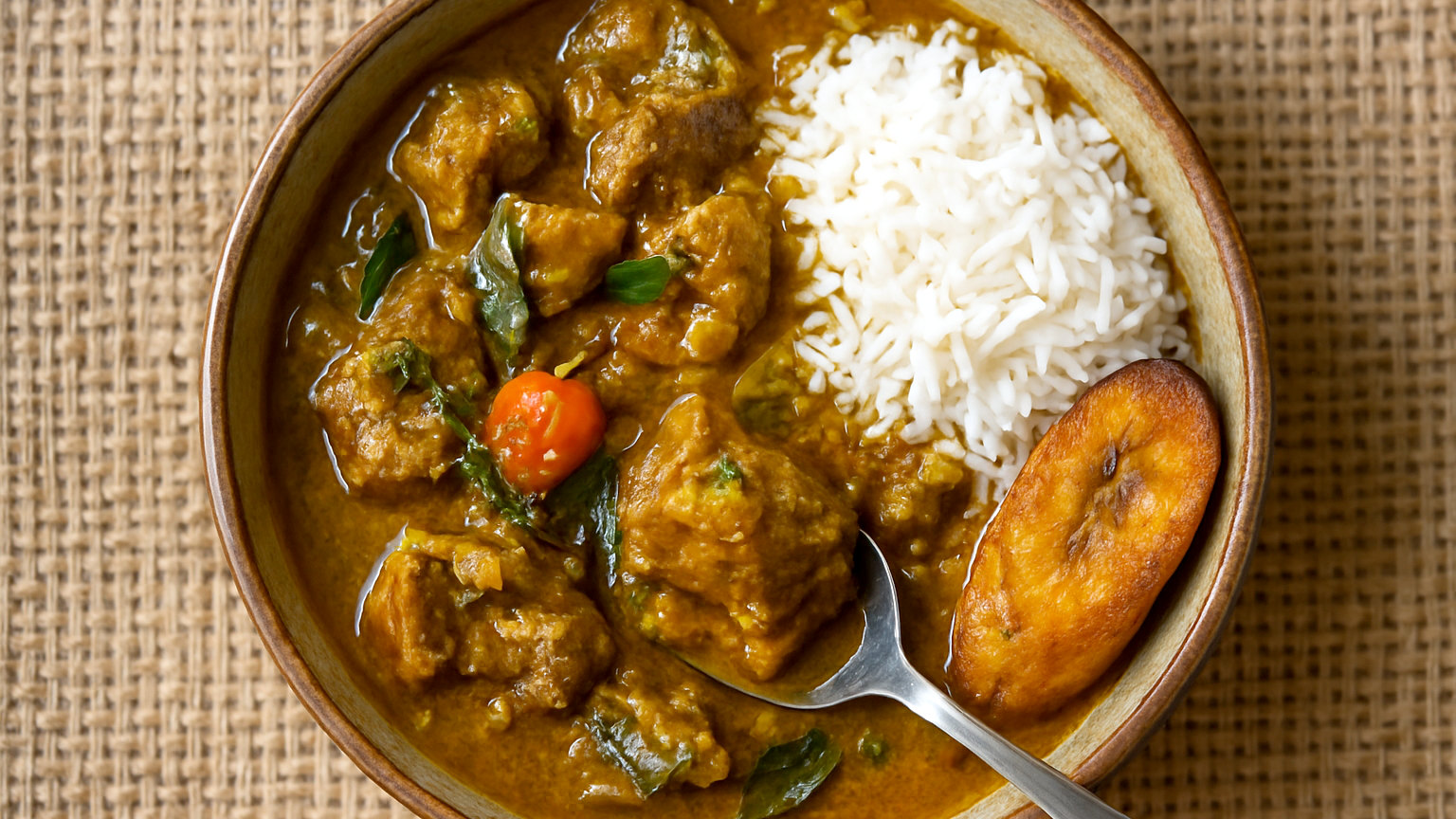
Rice and peas is the default, roti in Trinidad, and fried plantain alongside either. Something sharp helps too, since the sauces are rich.
Dark roasted curry powder, pandan and curry leaves, and coconut milk added in two stages. It looks almost black and tastes nothing like an Indian curry.
Sri Lanka keeps two blends and uses them for different dishes. Roasted for meat and dark curries, unroasted for fish, vegetables and anything pale.
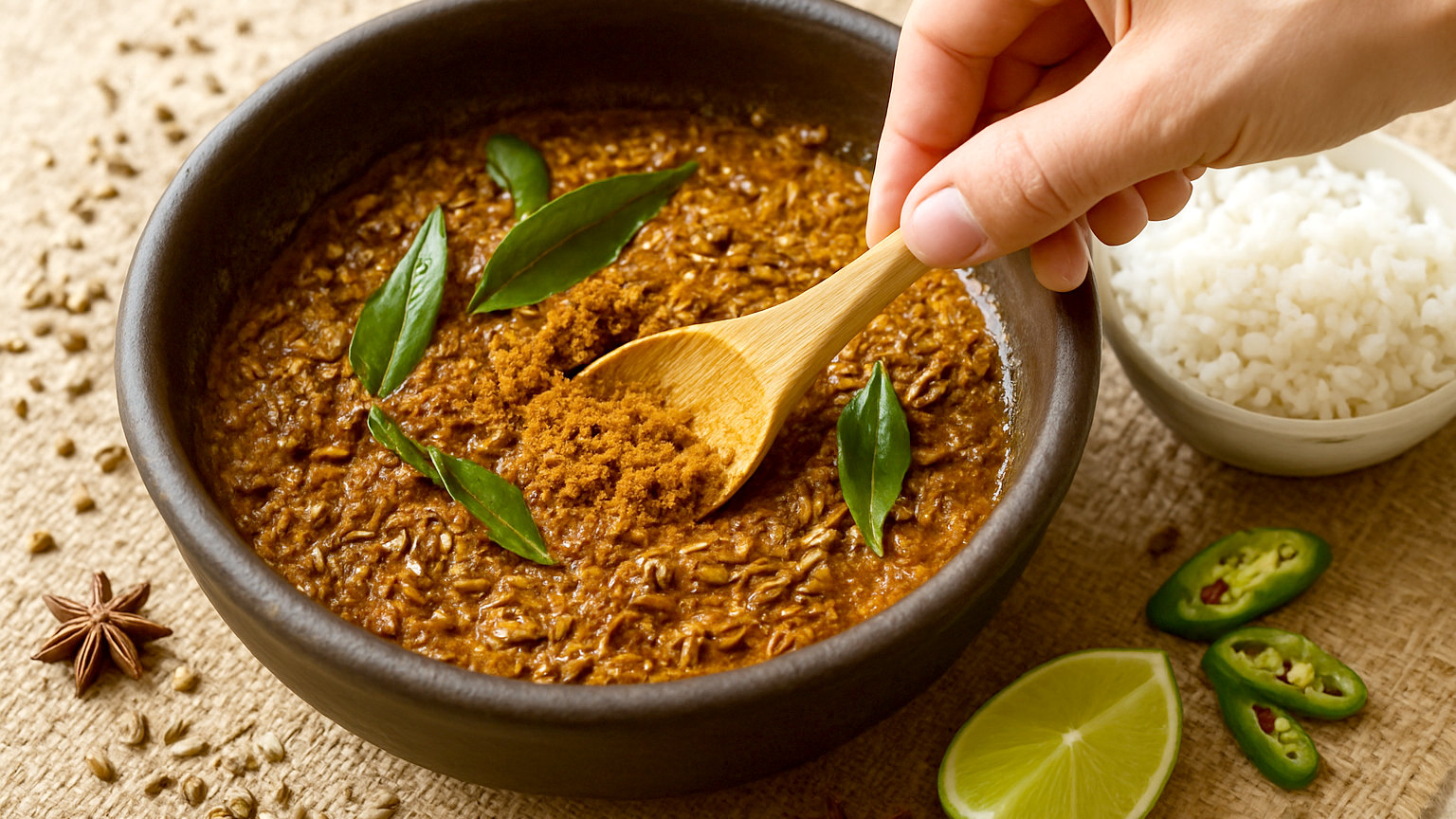
Roast the seeds until they are considerably darker than feels right, then grind with cinnamon, curry leaves and pandan. It should smell almost burnt.
Two whole-leaf aromatics that go into almost every Sri Lankan pot. Neither is a garnish, and a curry made without them tastes noticeably incomplete.
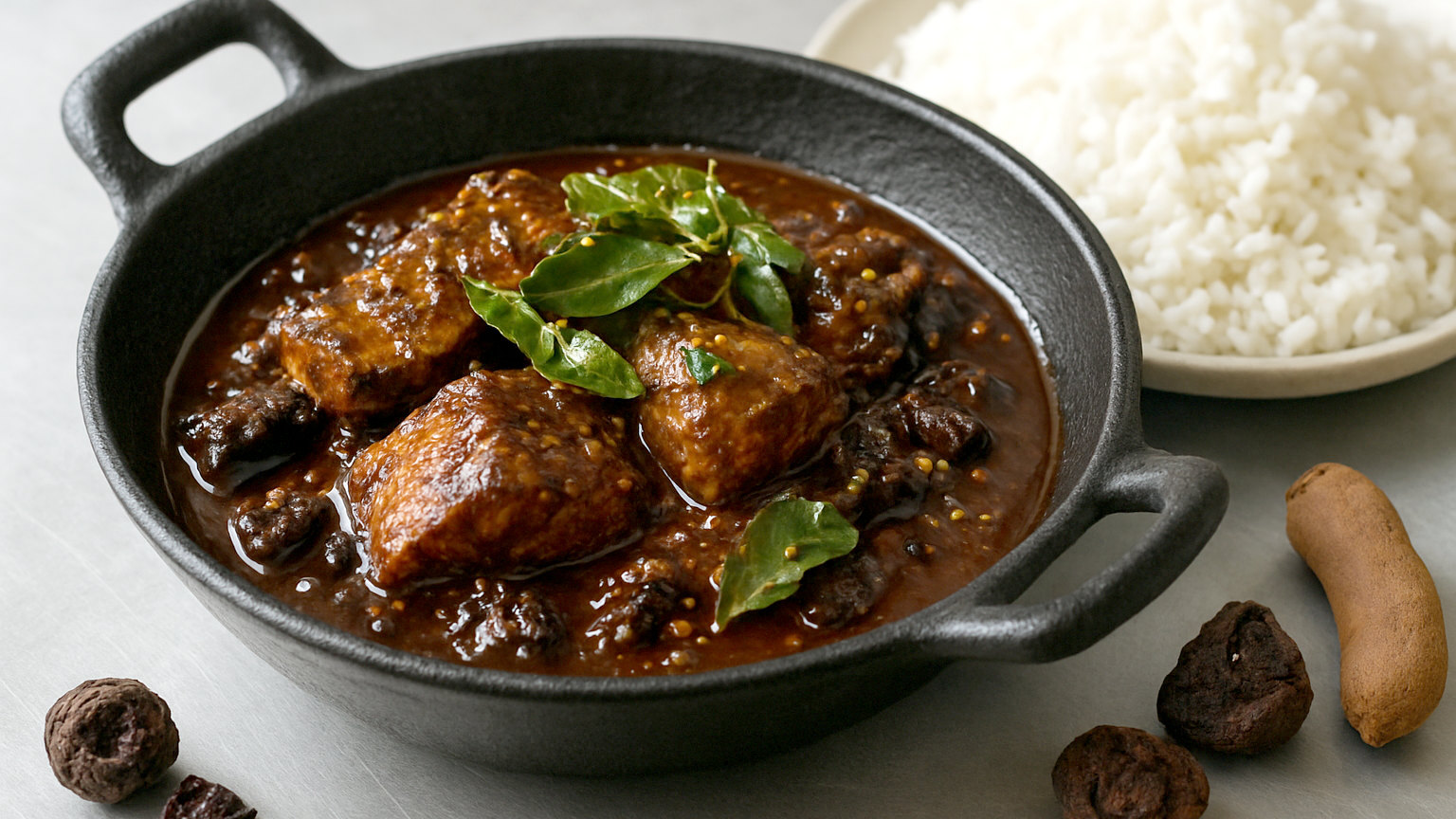
A dry sour fish curry with almost no liquid, blackened with goraka. It was developed to preserve fish without refrigeration and keeps for days.
A dried sour fruit that turns dishes almost black and preserves them. Tamarind is the usual substitute and it is noticeably milder.
Red lentils in coconut milk with unroasted powder, turmeric and a tempering of curry leaves and mustard seed. It appears on almost every Sri Lankan plate.
The spices are roasted almost to burning before grinding. It is not long cooking or caramelised onions, and it happens before the curry starts.
Fresh coconut pounded with chilli, lime, shallot and Maldive fish. It takes ten minutes and it goes on every Sri Lankan plate.