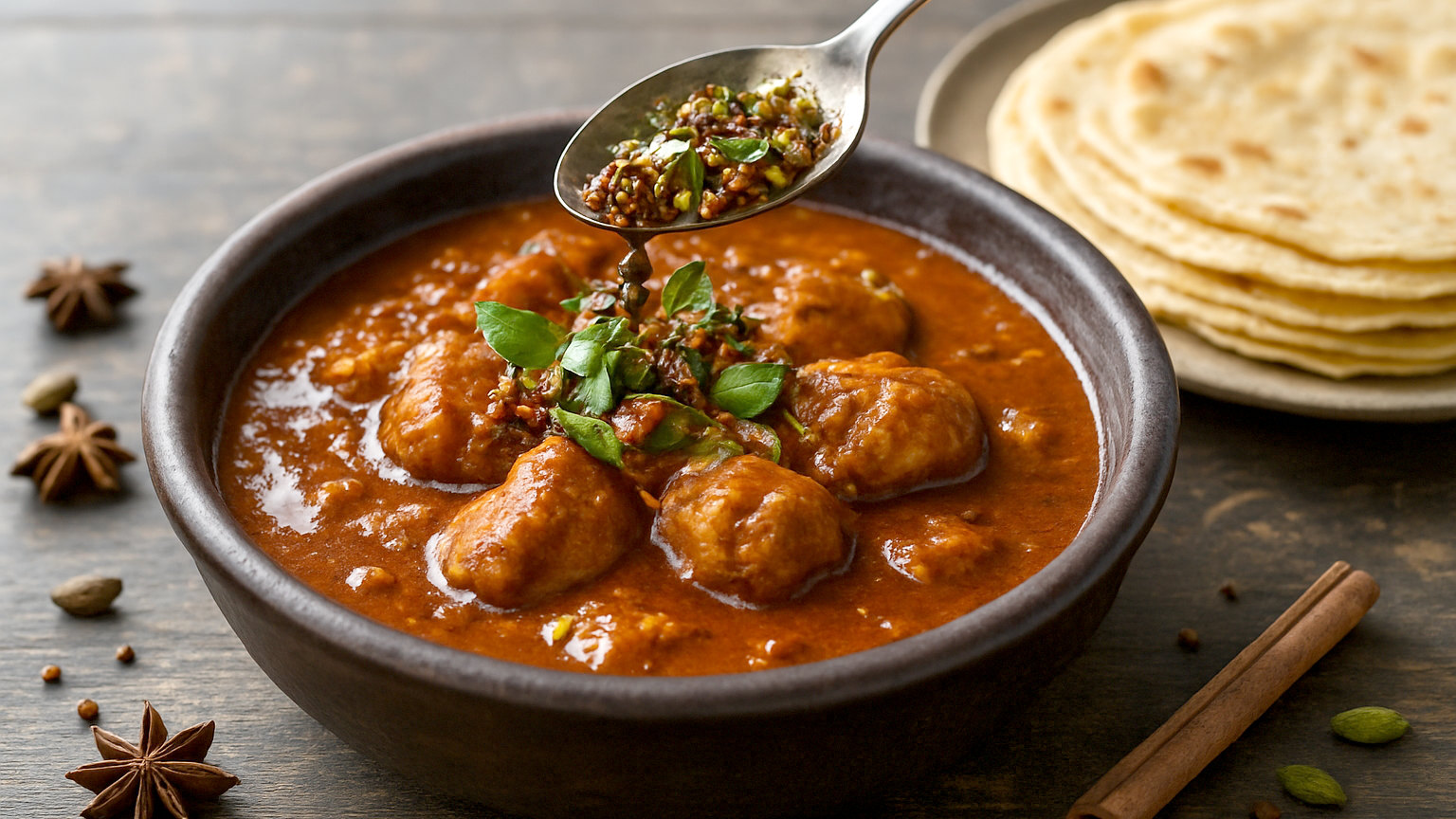
What Goes Into a Chicken Tikka Marinade?
Yoghurt, garlic, ginger, Kashmiri chilli and salt are the load-bearing five. Everything else is refinement, and the two-stage version is worth the extra step.
Most Indian curry recipes fail at home for the same two reasons: the onions are not cooked for anywhere near long enough, and the spices go in at the wrong moment. These recipes fix both. Every one says how dark the base should get before anything else joins it, when to add ground spice and when to add whole, and what a finished sauce should look like when it is ready rather than merely hot. Where a dish is a British curry-house invention rather than a regional Indian one - and several of the most popular are - we say so, because knowing which you are cooking tells you how far you can push it.
Yoghurt, garlic, ginger, Kashmiri chilli and salt are the load-bearing five. Everything else is refinement, and the two-stage version is worth the extra step.
Cashew paste, coconut milk or simply more tomato and butter will all carry the sauce. Removing the cream makes it sharper and more savoury.
Good tinned plum tomatoes beat fresh ones for most of the year, and passata beats both for smoothness. What matters more is how long you cook them.
Paneer takes the same marinade and the same char, and needs about half the cooking time. The trick is stopping it going rubbery under the grill.
Dried fenugreek leaf is the flavour people cannot place in a curry-house sauce. A tablespoon crushed in at the end changes the dish completely.
They share a method and diverge on fat, spice and origin. Butter chicken is smoother, sweeter and more buttery; tikka masala is spicier and more onion-led.
Cut the sugar, cut the cream, cook the tomatoes longer and lean harder on the onion base. The savoury version is closer to what the dish was.
A charcoal barbecue is the closest domestic thing to a tandoor. Direct heat, metal skewers and a lid for the last few minutes get you most of the way there.
Freeze the sauce and the tikka separately and the dish reheats almost perfectly. Frozen together with the cream already in, it is noticeably worse.
A madras is hot, sour and dark rather than merely hot. The chilli needs to taste of something, and the sourness is what keeps it from being one-dimensional.
Heat, sourness and a dark reduced sauce. It is a British curry-house category rather than a regional Indian dish, and knowing that explains most of it.
Hot enough to notice on every mouthful but not so hot that you stop tasting the rest. The measurable answer is around two to three teaspoons of chilli for four.