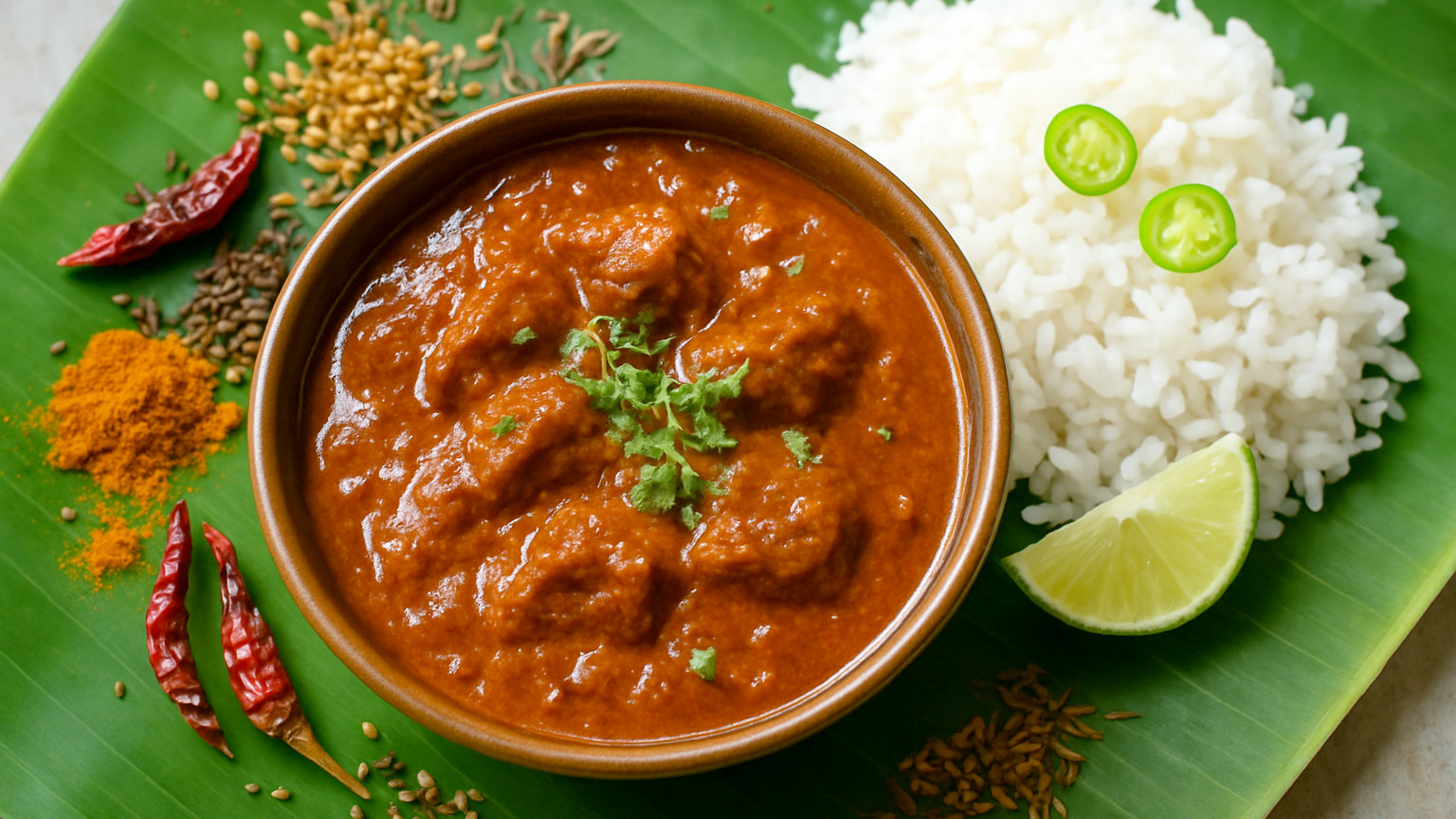
Which Chilli Should You Use in a Madras?
Kashmiri for colour, a hotter powder for burn, and fresh green chilli for brightness. Whole dried chillies add a smokiness the powders cannot.
By Curry Recipes Team
20 Jul 2026

Most Indian curry recipes fail at home for the same two reasons: the onions are not cooked for anywhere near long enough, and the spices go in at the wrong moment. These recipes fix both. Every one says how dark the base should get before anything else joins it, when to add ground spice and when to add whole, and what a finished sauce should look like when it is ready rather than merely hot. Where a dish is a British curry-house invention rather than a regional Indian one - and several of the most popular are - we say so, because knowing which you are cooking tells you how far you can push it.
Kashmiri for colour, a hotter powder for burn, and fresh green chilli for brightness. Whole dried chillies add a smokiness the powders cannot.
Lamb takes the heat better than chicken because the fat carries it. Shoulder needs ninety minutes, and the sauce should reduce around it rather than be added to it.
The name comes from the city, the dish does not. Madras curry is a British construction that borrowed a place name for its associations rather than its recipes.
A hot, dark commercial blend with fenugreek and mustard in it. Making your own takes ten minutes and gives you something markedly fresher.
Fat, dairy and starch bind capsaicin. Water spreads it around. Adding more liquid to a curry that is too hot makes a weaker curry that still burns.
Vegetables release water and dilute a sauce that depends on being concentrated. The fix is to roast the harder ones and add the softer ones late.
Because the chilli is doing all the work and nothing else is. A madras needs sourness, savoury depth and salt underneath the burn or it registers as pain alone.
Madras is hot and sour, vindaloo is hotter and sharper with vinegar, phall is a heat novelty. Only one of the three has a genuine regional ancestor.
Prawns need three minutes and the sauce needs an hour, so they must be cooked separately. Everything about this recipe follows from that.
Yes, and it is the ingredient that separates a madras from a curry that is merely hot. Lemon substitutes, but it is sharper and thinner.
The problem is that a madras must be reduced and a slow cooker cannot reduce. Everything here is about working around that one limitation.
Cooling, plain and starchy. A madras is intense enough that everything beside it should be doing the opposite, and full-fat dairy does the most work.