What Is Kabocha and How Do You Cook It?
A dense sweet Japanese squash with edible skin and a chestnut-like texture. It holds its shape better than butternut and is worth seeking out.
By Curry Recipes Team
15 Dec 2025

Japanese curry is the mildest and the most comforting of the three great curry traditions, and the one most often made from a shop-bought roux block. These recipes cover both routes: how to get the best out of a block if that is what is in the cupboard, and how to build the sauce from a proper flour-and-butter roux with curry powder, which takes twenty minutes and tastes considerably better. Katsu gets particular attention, because a crisp panko crust that stays crisp under sauce is mostly a matter of oil temperature and where you pour.
A dense sweet Japanese squash with edible skin and a chestnut-like texture. It holds its shape better than butternut and is worth seeking out.
Aubergine crumbs better than any other vegetable and turns silky under the crust. Salt it first, or the coating slides off in the oil.
Added too early, cut too small, or the wrong vegetable entirely. In a sauce this thick there is no rescuing them once they have gone.
Dried shiitake, kombu and miso between them replace what a braise would have contributed. Browning the vegetables first does the rest.
Two sweet dense vegetables that suit the sauce better than anything else. Roast them first and the curry gains a depth simmering cannot give it.
Usually not, and rarely in a way the packaging makes clear. Beef extract, chicken extract and lard all appear well down the ingredient list.
Mushrooms supply the savoury weight meat would have, provided they are browned hard first. Undercooked they simply release water into the sauce.
Three substitutions: oil for butter, kombu and shiitake for dashi, and a homemade roux for the block. None costs much in flavour.
Small pieces of squash, sweet potato and aubergine, crumbed and fried, with the sauce served for dipping so nothing goes soft.
Shiitake dried for the stock and fresh for texture, chestnut for reliability, and shimeji for their firm bite. Enoki are the one to avoid.
Larger than instinct suggests, and the rolling cut is worth learning. It gives uneven faces that catch more sauce and cook more evenly.
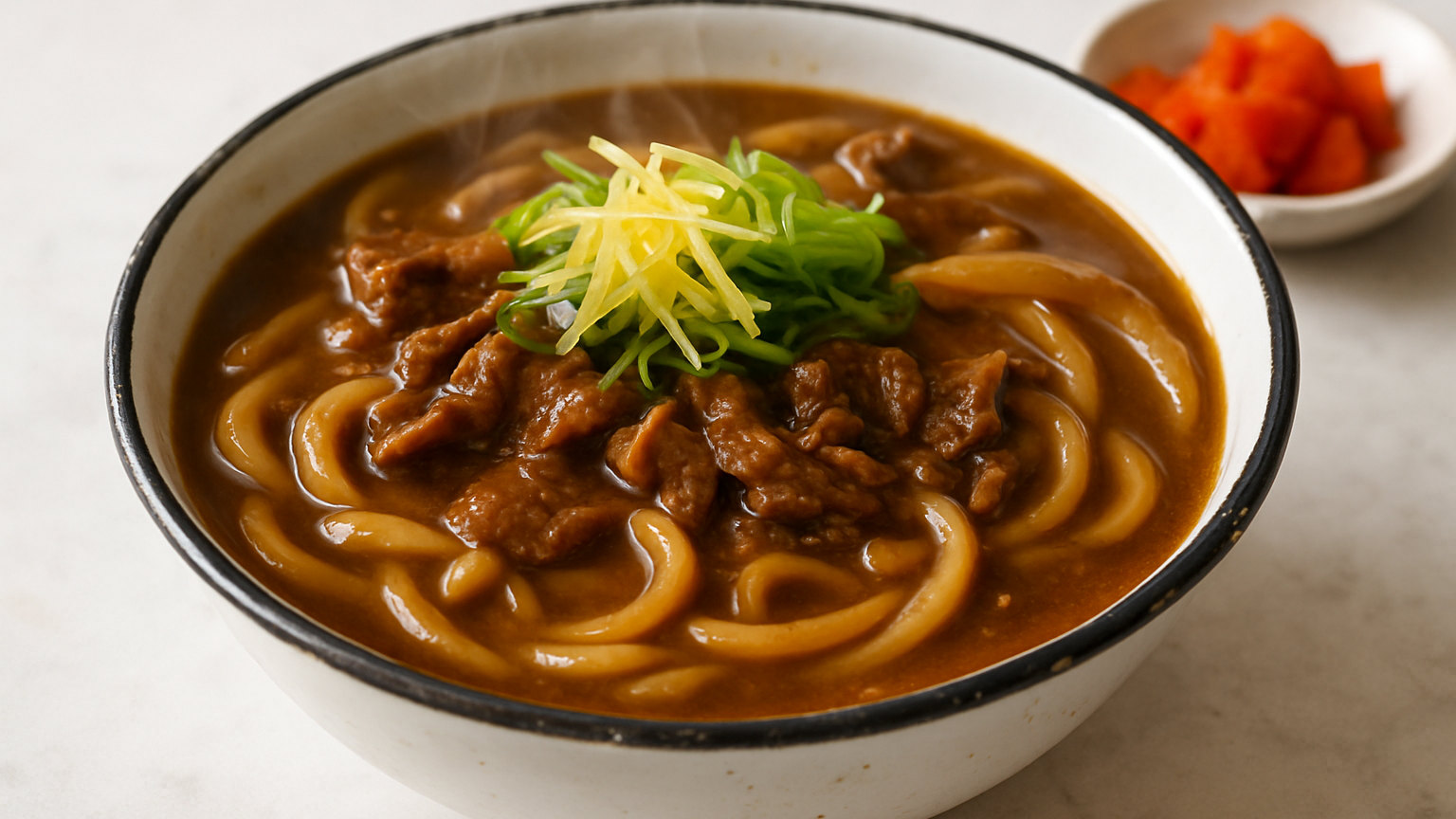
Leftover curry loosened with dashi and poured over thick udon. Ten minutes, and it is a better dish than the curry rice it came from.